
PPF vs. Ceramic Coating: Which Gives the Best Paint Protection?
PPF and ceramic coating are both popular forms of paint protection, but they solve completely different problems. Here we compare the two methods and give our recommendation for Norwegian conditions.
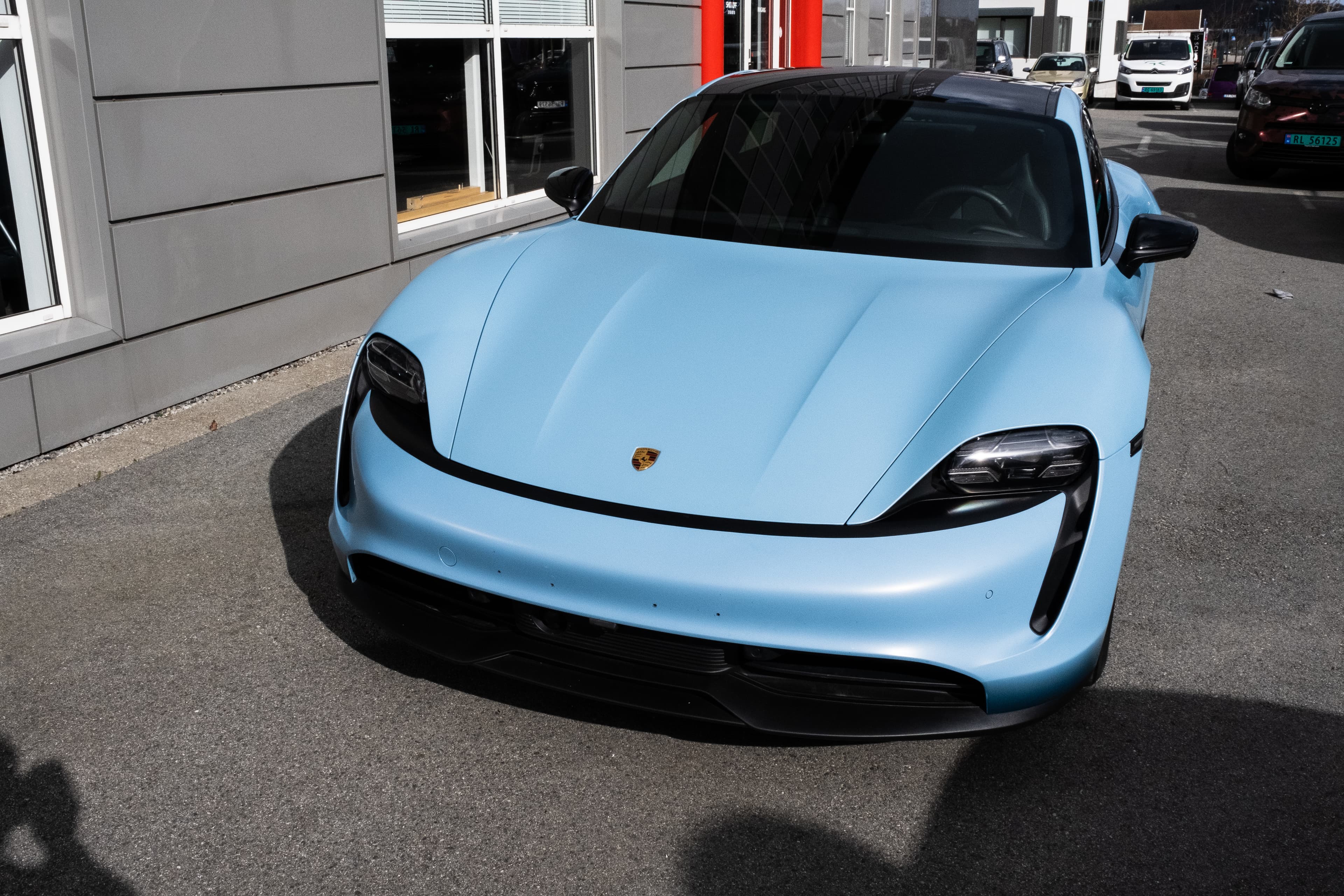
PPF (paint protection film) and ceramic coating are the two most common ways to protect your car's paint. Many people mix them up, but they work completely differently and protect against different things. Here is a thorough comparison so you can make the right choice for your car.
What Is PPF?
PPF (Paint Protection Film) is a transparent polyurethane film applied directly to the car's paint. The film is 150-200 microns thick and acts as a physical shield that absorbs impacts and prevents damage from reaching the paint.
PPF protects against:
- Stone chips and road debris
- Scratches and scuffs
- Bird droppings and insect residue
- UV radiation and fading
Modern PPF such as GSWF Defender Platinum has a self-healing top coat: light surface scratches disappear on their own when the film is exposed to heat from sunlight or warm water.
What Is Ceramic Coating?
Ceramic coating is a liquid silicon dioxide (SiO2) applied to the paint that cures into a hard, hydrophobic layer. It is only a few microns thick, far thinner than PPF.
Ceramic coating protects against:
- UV radiation and oxidation
- Chemicals, bird droppings and tree sap
- Water spots and mineral deposits
- Mild surface resistance
The coating causes water to bead off the surface, carrying away dirt. The car stays cleaner longer and is quicker to wash.
Side-by-Side Comparison
| Feature | PPF | Ceramic Coating |
|---|---|---|
| Stone chip protection | Yes (physical film) | No |
| Scratch protection | Yes, self-healing | Limited (surface hardness) |
| UV protection | Yes | Yes |
| Hydrophobic surface | Yes (with top coat) | Yes, very strong |
| Self-healing | Yes | No |
| Lifespan | 7-10 years | 2-5 years |
| Visibility | Nearly invisible | Completely invisible |
| Removable | Yes, professionally | Requires polishing |
| Installation time | 1-5 days | 1-2 days |
What Protects Against What?
The most important difference: PPF provides physical protection, ceramic coating provides chemical protection.
A stone chip hitting a panel with ceramic coating will damage the paint just as if it were unprotected. The coating is simply too thin to absorb an impact. PPF, on the other hand, is 200 microns thick and absorbs the blow so the paint underneath remains undamaged.
Conversely, ceramic coating is better than PPF alone at keeping the car clean day to day. The hydrophobic effect is stronger, and it is easier to wash away brake dust, road salt and grime from coated surfaces.
Price: What Does It Cost?
| Solution | Typical Price |
|---|---|
| PPF Front Kit (bonnet, bumper, fenders) | from NOK 15,900 |
| PPF Track Pack (extended coverage) | from NOK 21,900 |
| PPF full wrap (entire car) | from NOK 40,000 |
| Ceramic coating (full car) | NOK 5,000 - 15,000 |
| PPF Front Kit + coating on the rest | from NOK 20,000 - 30,000 |
All PPF prices ex. VAT. Calculate the exact PPF price with our calculator.
Cost Over Time
PPF has a higher upfront cost but lasts 7-10 years. Ceramic coating is cheaper but needs renewal every 2-5 years. Over a 10-year period:
- PPF Front Kit: approx. NOK 15,900 (one-time)
- Ceramic coating x 2-3 applications: approx. NOK 10,000 - 30,000
- Paint repairs without protection: easily NOK 10,000 - 50,000+ in stone chips, scratches and polishing
For cars with special colours or multi-stage metallic paint, a single bonnet respray can cost NOK 15,000 - 25,000. PPF prevents you from ending up there.
Norwegian Conditions: Why PPF Matters More Here
Norway has some of the toughest conditions for car paint in Europe:
- Studded tyres kick up stones and grit with far greater force than regular tyres
- Road salt is used from October to April and is highly corrosive
- Gravel roads are common outside urban areas
- Long winters mean months of continuous exposure
In these conditions, ceramic coating alone is not enough for the front end. Stone chips from studded tyres go straight through the coating. PPF is the only solution that provides real physical protection.
Who Should Choose What?
PPF is right for you if you:
- Have a new or valuable car
- Drive significant motorway miles (stone chip exposure)
- Want to preserve resale value
- Lease your vehicle and need to avoid return charges
- Live in an area with gravel roads or studded tyre use
Ceramic coating alone may suit you if you:
- Have an older car where existing paint damage will not be repaired
- Drive mostly in the city at low speeds
- Prioritise easier cleaning over physical protection
- Have a tighter budget
The combination is ideal if you:
- Want the best possible total solution
- Own a premium or luxury vehicle
- See your car as an investment worth protecting
Our Recommendation
We install both, and our answer is the same almost every time: combine PPF and ceramic coating.
The optimal solution:
- PPF on high-impact areas: Bonnet, bumper, fenders, mirror caps, rockers and A-pillars
- Ceramic coating on the rest: Roof, doors, rear fenders, wheels and glass
This combination provides physical protection where the car is most exposed, and a hydrophobic surface across the entire vehicle for easier maintenance.
Frequently Asked Questions
Can I apply ceramic coating on top of PPF?
Yes, and many people do. The coating gives the PPF surface even better hydrophobic properties and makes it easier to keep clean.
How long does PPF last compared to coating?
PPF with GSWF Defender Platinum lasts 7-10 years with proper maintenance. Ceramic coating typically lasts 2-5 years before it needs renewal.
Does ceramic coating protect against stone chips?
No. Ceramic coating is only a few microns thick and provides no physical protection against stone chips or scratches. Only PPF provides real stone chip protection.
What is cheapest over time?
PPF has a higher upfront cost but requires less frequent maintenance and prevents costly paint repairs. For most cars, PPF on exposed areas is the most cost-effective solution over time.
Calculate the Price
Use our PPF calculator to calculate the exact price for your car. Select car type, package and any add-ons, and you get the price immediately.
Read more:
At Show Off AS in Sandnes, we offer both PPF and ceramic coating. Contact us for an assessment of what suits your car best, or calculate the PPF price yourself.
Why Choose Show Off for PPF?
PPF is only as good as the prep work, the installation environment, and the package you choose. At Show Off, we install PPF in controlled conditions, work with quality film, and help customers choose the right coverage instead of pushing a bigger package than they need.
That matters most on lease cars, heavily driven cars, and vehicles with exposed front ends. If the film is meant to protect for years, the work has to be right from the start.
Next Step
Not sure how much coverage you need? See our PPF service or contact us for a practical recommendation and quote.

Christer Rasmussen
Key Account Manager for wrapping, PPF, and specialty products
Christer writes about vehicle wrapping, PPF, paint protection, and product choices based on customer projects, workshop experience, and day-to-day advisory work.
Need help deciding?
PPF vs. Ceramic Coating: What Suits Your Car?
Comparison of paint protection film and ceramic coating. Pros, cons, durability, and prices side by side.
Stay updated
Subscribe to our newsletter for tips on branding, wrapping and more.