Sustainable Promotional Products: How to Choose Eco-Friendly Branded Items
78% of companies are increasing their investment in sustainable merch. Here is everything you need to know about certifications, materials and pricing to choose eco-friendly promotional products that actually make a difference.
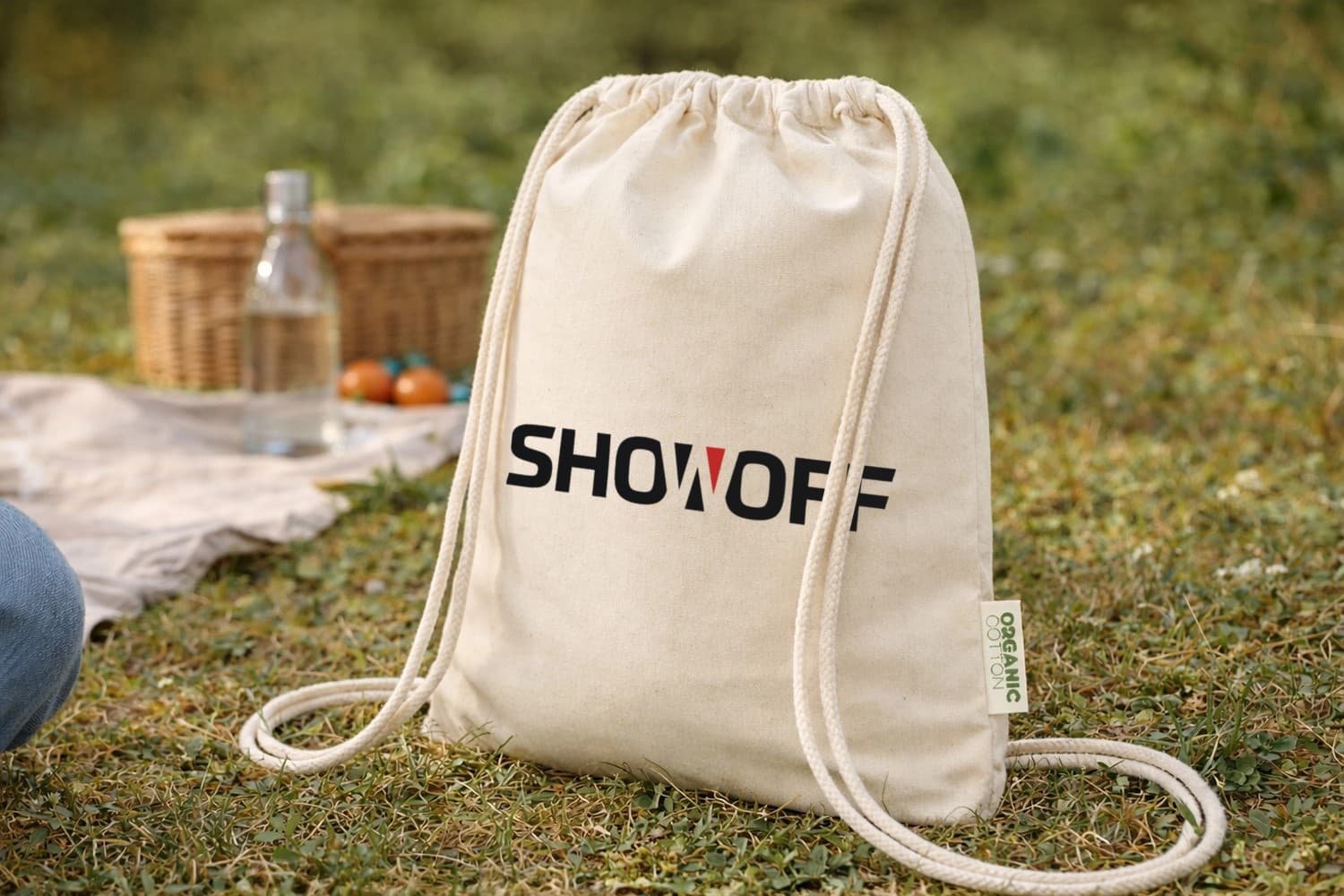
Sustainability is no longer a nice-to-have on your procurement checklist. It is a requirement. 78% of companies are increasing their investment in eco-friendly merch, and for many buyers, documented sustainability has become mandatory in tender processes.
But the market is full of greenwashed products with fine words and thin evidence. This guide gives you the tools to separate genuine sustainability from empty marketing, and to choose branded promotional products that actually make a difference.
What are sustainable promotional products?
Sustainable promotional products are branded items made from eco-friendly materials, produced under fair working conditions, with documented lower environmental impact than conventional alternatives. They are certified, traceable and designed for long life.
That does not mean they have to be expensive or boring. Sustainable products exist in every price range and category, from bamboo pens at NOK 30 to premium organic cotton hoodies at NOK 350.
Certifications you should know
Certifications are your guarantee that the product lives up to the supplier's claims. Here are the most important ones:
| Certification | What it covers | Product types | Trust level |
|---|---|---|---|
| GOTS | Organic textiles, entire value chain | T-shirts, tote bags, hoodies | Very high |
| Oeko-Tex Standard 100 | Absence of harmful chemicals | All textiles | High |
| EU Ecolabel | Holistic environmental assessment, lifecycle | Paper products, textiles, cleaning | High |
| Fairtrade | Fair trade, working conditions | Cotton products, food/drink | High |
| GRS | Recycled content (min. 20%) | Polyester, nylon, plastic | High |
| FSC | Sustainable forestry | Wood products, paper, bamboo | Very high |
A product with GOTS certification has undergone independent auditing of the entire production chain, from raw material to finished garment. There is a difference between saying "we use organic cotton" and proving it with third-party certification.
Material guide: from bamboo to recycled steel
Sustainable materials are replacing conventional alternatives across most product categories. Here is the overview:
| Material | Replaces | Typical products | Price difference vs. conventional |
|---|---|---|---|
| Organic cotton | Conventional cotton | T-shirts, tote bags, caps | +10-20% |
| Recycled polyester | Virgin polyester | Bags, backpacks, fleece | +10-15% |
| Bamboo | Plastic, metal | Pens, cutlery, toothbrushes | +20-30% |
| Recycled steel/aluminium | Virgin steel, plastic | Water bottles, thermal mugs | +15-25% |
| Cork | Plastic, faux leather | Notebooks, bags, coasters | +25-35% |
| Recycled paper | Virgin paper | Notebooks, packaging, cards | +5-10% |
Organic cotton uses 91% less water than conventional cotton. Recycled polyester saves 59% energy compared to virgin production. These numbers are not cosmetic. They matter.
Conventional vs sustainable: price comparison
Here are specific prices for the most ordered products (at 100 pieces):
| Product | Conventional (price ex. VAT) | Sustainable (price ex. VAT) | Extra cost |
|---|---|---|---|
| T-shirt with print | NOK 80/pc | NOK 120/pc | +50% |
| Hoodie with embroidery | NOK 200/pc | NOK 280/pc | +40% |
| Water bottle with logo | NOK 50/pc | NOK 80/pc | +60% |
| Steel thermal bottle | NOK 100/pc | NOK 130/pc | +30% |
| Ballpoint pen | NOK 15/pc | NOK 30/pc | +100% |
| Tote bag | NOK 25/pc | NOK 40/pc | +60% |
| Notebook | NOK 30/pc | NOK 45/pc | +50% |
The percentage markup looks steep on cheap products. But in actual currency, the difference is often marginal: NOK 15 extra for a pen, NOK 40 extra for a t-shirt. For companies already investing in branding, this is a small price for a better product and a stronger signal.
Greenwashing vs real sustainability: how to check
The market is full of vague claims. Here are five red flags that expose greenwashing:
1. No certification. Claims like "eco-friendly" and "green" without third-party certification are meaningless. Demand GOTS, FSC, GRS or equivalent documentation.
2. Vague material descriptions. "Made from natural materials" can mean anything. Demand specific material descriptions with percentages: "100% GOTS-certified organic cotton."
3. No traceability. A serious supplier can tell you where the materials come from, who produced the item and under what conditions. If they cannot answer, move on.
4. Only the packaging is sustainable. A plastic product in a paper bag is not sustainable. Check the product itself, not just the wrapping.
5. Exaggerated claims. "100% climate neutral" or "zero environmental impact" does not exist. All production has environmental impact. Credible suppliers are honest about this and focus on reducing their footprint, not eliminating it.
The most popular sustainable promotional products in 2026
Based on orders from Norwegian companies, here are the most requested products:
- Thermal bottle in recycled steel (NOK 100-200 ex. VAT): Daily-use product with high visibility
- T-shirt in GOTS-certified organic cotton (NOK 120-180 ex. VAT): The new standard for branded clothing
- Bamboo pen with laser engraving (NOK 25-40 ex. VAT): Affordable handout item with sustainability profile
- Tote bag in recycled cotton (NOK 35-55 ex. VAT): Practical everyday product with large logo area
- Stone paper notebook (NOK 50-80 ex. VAT): Water-resistant and hits the mark with office workers
- Backpack in recycled PET (NOK 150-300 ex. VAT): Premium giveaway with daily exposure
- Cork coasters with UV print (NOK 20-40 ex. VAT): Original table decoration and conversation starter
See the latest promotional products trends 2026 for even more product ideas.
Sustainability as brand building
Sustainable promotional products are not just about materials. They are a strategic communication tool. Companies with ESG requirements (Environmental, Social, Governance) use promotional products to demonstrate their values in practice.
Industry studies show that 73% of consumers have a more positive impression of companies that give sustainable gifts. For B2B companies, the effect is even clearer: buyers report that sustainable merch strengthens trust in the supplier.
An employee welcome kit with sustainable products sets the tone from day one. It shows that the company practises what it preaches.
How to order sustainable promotional products from Show Off
- Send us a request with budget, quantity and occasion
- We suggest products with documented certifications and material specifications
- You receive a digital proof with logo, colours and print technique for approval
- We produce and quality-check every product before delivery
- Delivery to your address (or directly to trade show, event or office)
Standard delivery time is 2-3 weeks. We can document certifications and environmental impact for your order, which is useful for ESG reporting.
Frequently asked questions
How much more do sustainable promotional products cost?
Sustainable promotional products typically cost 10-30% more than conventional ones. For an organic cotton t-shirt, that means around NOK 120/pc versus NOK 80 for standard (at 100 pieces, ex. VAT). The markup varies with material and certification, but it is rarely a barrier for companies already investing in branding.
Which certifications matter most?
GOTS is the gold standard for textiles. FSC for all wood products and paper. GRS for recycled content. Oeko-Tex Standard 100 guarantees absence of harmful substances. If the product has at least one of these, you are on solid ground.
Is bamboo always sustainable?
Bamboo grows quickly without pesticides, which is positive. But processing (especially for bamboo textiles) can involve aggressive chemicals. Choose FSC-certified bamboo and verify that the manufacturer documents the entire value chain. Bamboo pens and bamboo cutlery are generally unproblematic. Bamboo clothing requires more scepticism.
Can I get VAT deductions on sustainable giveaways in Norway?
Yes. Sustainable giveaways follow the same rules as conventional ones. Promotional gifts under NOK 100 incl. VAT per piece qualify for full VAT deduction. Gifts under NOK 324 qualify for income tax deduction. Read more about best giveaways under 100 NOK.
What is the minimum order quantity?
For most sustainable products, the minimum is 25-50 pieces. Some products with specialty printing may have higher minimum requirements. We find solutions tailored to your needs.
Contact us for a no-obligation quote on sustainable promotional products. See also our complete guide to branded promotional products and promotional products and merch for the full range.
Why Choose Show Off for Branded Products and Stickers?
Branding works best when product choice, design, and real use all line up. At Show Off, we help clients choose solutions that will actually be used, not just ordered. We look at audience, budget, print method, lead time, and how the products will be used before we recommend anything.
That gives you branded materials that support the brand instead of turning into forgettable stock.
Next Step
Need help choosing products that fit your audience and budget? See our stickers page, promotional products service, or contact us.

Show Off AS
Editorial team at Show Off
When Show Off AS is listed as the author, the content has been written and reviewed by our internal team working with branding, exhibitions, signage, wrapping, and promotional products.
Sustainable products for branded merchandise
Browse categories and products that fit the advice in this guide.
Need help deciding?
Suggested products

Hydro Flask Micro Hydro™ 200 ml mini insulated tumbler

Hydro Flask Wide Mouth 946 ml insulated stainless steel water bottle with straw cap

Hydro Flask Wide Mouth 946 ml insulated stainless steel water bottle

Hydro Flask Standard Mouth 621 ml insulated stainless steel water bottle
Stay updated
Subscribe to our newsletter for tips on branding, wrapping and more.