
Building Permit for Facade Signs: When Do You Need One, and How Do You Apply?
Many business owners are surprised to learn that facade signs require a building permit. But the rules are not as complicated as they sound. Here is a complete overview of when you need to apply, when you do not, and what the process involves.
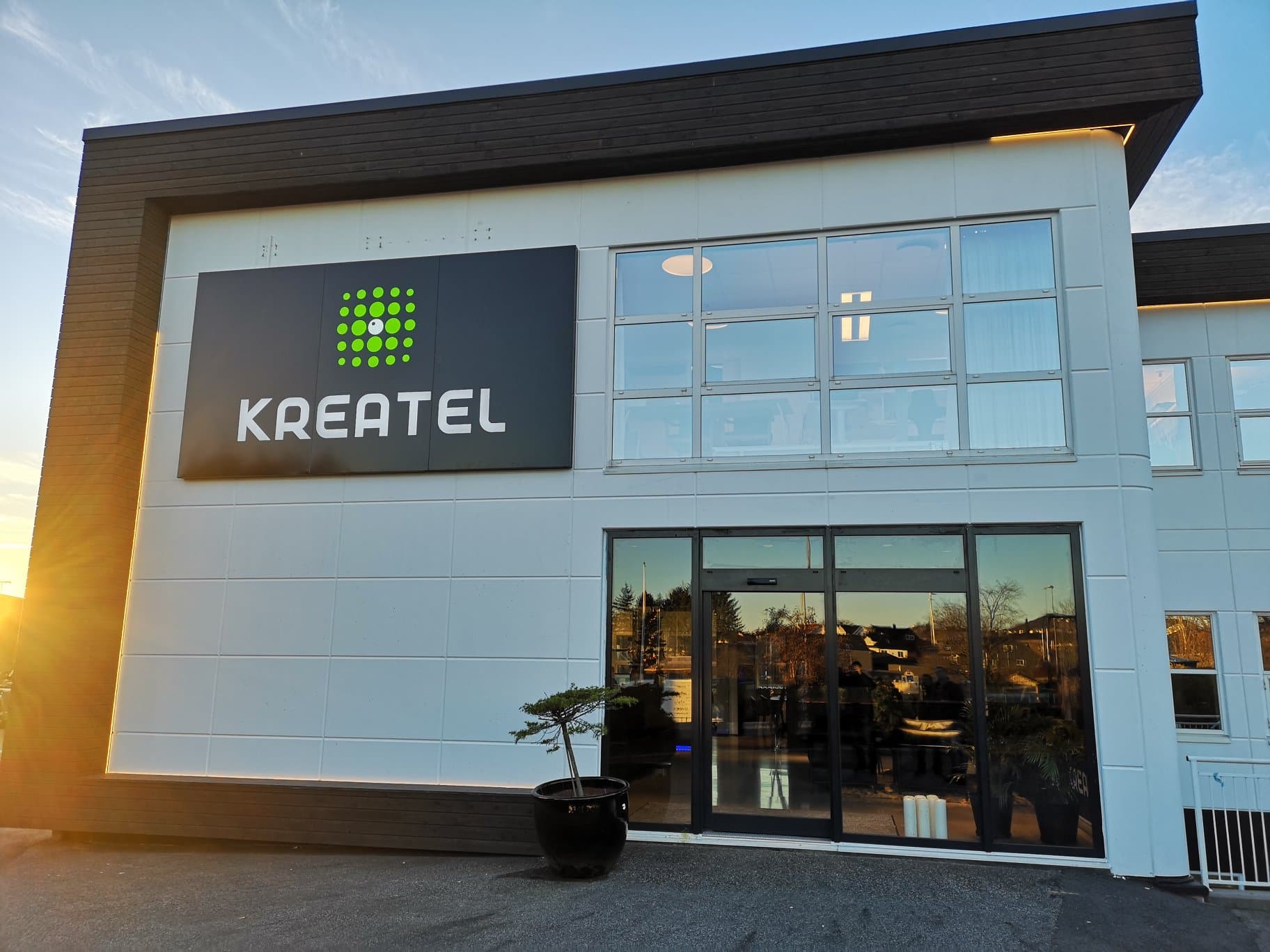
What is a building permit for signs?
A building permit for signs is an application to the local municipality for permission to install signage on a facade or property. Most municipalities require this for signs over 1 square metre.
Do you need a building permit for your facade sign?
Short answer: It depends on the size, type and where you are mounting it. Placing signs and advertising devices is generally subject to permit requirements under the Norwegian Planning and Building Act (plan- og bygningsloven, or PBL) Section 20-1(i), with material requirements in Section 30-3. But there are exemptions for smaller signs.
Many business owners plan a new facade sign without thinking about building permits. Then they discover the municipality requires an application, and suddenly the whole project takes longer than expected. With a bit of knowledge about the regulations, you can avoid that surprise.
When are you exempt from applying?
The Building Application Regulations (SAK10) Section 4-1 contains two important exemptions for signs:
Exemption 1: Signs up to 3.0 m2 mounted flat on a wall. You can install one sign per facade without applying, as long as it is flat-mounted and does not exceed 3 square metres. This applies regardless of whether the sign is illuminated.
Exemption 2: Signs up to 6.5 m2 mounted on a wall, or freestanding signs up to 3.5 m tall and 1.5 m wide. This exemption also applies to only one sign per facade or location.
Important limitations still apply:
- The exemptions only cover one sign per facade. If you want to install multiple signs, you must apply.
- The sign must not conflict with zoning plans, the municipal land-use plan or other regulations.
- The sign must not pose a risk to personal safety.
- The municipality may have its own plan provisions that override the national exemptions. Stavanger, for example, has a lower exemption threshold of just 0.7 m2.
- For listed or heritage buildings, stricter rules apply, and the exemptions will usually not be valid.
Even if the sign is exempt from the permit requirement, it must still satisfy material requirements for aesthetics and visual quality under PBL Sections 29-2 and 30-3.
When MUST you apply?
You must always submit a building application in these situations:
- The sign is larger than 3.0 m2 (or 6.5 m2 under the extended exemption)
- You are installing multiple signs on the same facade
- The sign is a projecting sign that extends from the facade (requires a permit regardless of size, as it overhangs public space)
- You are installing a pylon or freestanding sign that exceeds the exemption limits
- The building is listed or located in a designated conservation area
- The municipality's zoning plan or sign plan requires an application
- The sign is placed along a road and is subject to the Road Act Section 33
In practice, this means that most illuminated facade signs for commercial premises will require a building permit, unless they are very small and flat-mounted.
The application process step by step
Here is an overview of what you need to go through when submitting a building application for a facade sign:
1. Check the zoning plan
Before you do anything else: find the zoning plan for your property. Many municipalities have specific signage provisions in their land-use plans. Oslo, for example, has a legally binding sign and advertising plan with both general and area-specific guidelines. Also check whether the building has an existing sign plan.
2. Prepare documentation
A building application for signage typically requires the following:
- Application form (Byggblankett 5174/5175)
- Site plan at scale 1:500 showing the sign's location
- Facade drawing or photomontage showing the entire facade with the sign
- Detailed description of the sign (dimensions, materials, colours, lighting)
- Night-effect illustration if the sign is illuminated
- Neighbour notification with receipt (Byggblankett 5155/5156)
- Road authority permission if the sign is along a public road
3. Send neighbour notification
You must notify neighbours and adjacent property owners at least 14 days before submitting the application. The notification must include facade drawings showing the sign. If all neighbours give written consent, you can submit the application immediately.
4. Submit the application
Most municipalities accept digital applications. Many use eByggesok or similar portals. Some municipalities also accept applications by email.
5. Wait for a response
Processing times vary:
| Application type | Typical processing time |
|---|---|
| Simple sign application without dispensation | 3 weeks |
| Application requiring dispensation | Up to 12 weeks |
| Sign on a heritage building | 8-12 weeks |
The municipality must respond within 12 weeks for applications requiring dispensation. If the deadline is exceeded, the fee may be reduced.
What does the building application cost?
Municipal processing fees vary. The fee covers the municipality's work in handling the application and is based on the cost-recovery principle. Here is a general overview:
| Cost item | Typical price range |
|---|---|
| Municipal processing fee for signs | NOK 3,000 - 10,000 |
| Additional fee for dispensation | NOK 5,000 - 15,000 |
| Neighbour notification (postage and forms) | NOK 500 - 1,500 |
| Professional help with the application | NOK 5,000 - 15,000 |
Note: Fee rates are adjusted on 1 January each year in most municipalities. Check your municipality's fee schedule for current prices. Bergen municipality offers an online fee calculator, which makes it easier to estimate the exact cost.
If you have started installation before receiving permission, you risk an additional fee of 50% on top of the original fee. If your application is rejected, you still pay 25% of the fee in most municipalities.
Differences between municipalities
While the Planning and Building Act provides the national framework, municipalities have scope to impose stricter requirements:
- Oslo has its own legally binding sign and advertising plan. Moving advertising (digital screens facing public space) is not permitted. Heritage buildings must follow the City Antiquarian's guidelines.
- Bergen requires applications for most sign works, including replacements. The old sign bylaws expired in 2018, and cases are now assessed under the municipal plan.
- Stavanger has an exemption threshold of just 0.7 m2, far below the national 3.0 m2. They also have specific requirements for lighting.
- Sandnes allows only one business sign per facade plus one information sign. Lightbox signs are not permitted, and temporary signs lasting more than 3 weeks fall under the regulations.
It always pays to check with your municipality first. A preliminary conference with the building applications department is free in most municipalities and gives you clarity on what applies to your specific project.
What happens if you install a sign without permission?
Installing a sign that requires a permit without submitting an application can have consequences:
- Order to remove: The municipality can demand that the sign is taken down.
- Coercive fines: If you do not comply with the order, the municipality can impose ongoing fines.
- Retroactive application: In many cases, you are given the opportunity to apply after the fact, but this costs extra (50% surcharge on the fee), and there is no guarantee of approval.
The rules exist for good reason. They ensure that signage in an area is visually appropriate, safe and in line with local plans. The consequences of skipping the application are greater than the small extra effort it takes to do things properly.
Temporary signs: separate rules
Are you putting up a temporary sign, for example for a campaign, opening or construction period? Separate rules apply. Temporary signs that will stand for less than two months are exempt from the permit requirement under PBL Section 20-5. But the material requirements for design and safety still apply.
In Sandnes, the limit for temporary signs is set at 3 weeks, not two months. Always check what applies locally.
Show Off AS handles the entire process for you
At Show Off in Sandnes, we do not just handle design, production and installation of facade signs. We also help with the building application. That means you do not have to study regulations, create photomontages and send neighbour notifications on your own.
Our process looks like this:
- Site survey where we assess the facade and clarify whether an application is needed
- Design and visualisation with photomontage that is also used in the application
- Application handling with all required documentation
- Production in our workshop in Sandnes
- Installation with lighting connection and completion notice
Need a new facade sign? Get in touch for a no-obligation site survey. You can also read more about how to choose the right facade sign for your business or how much a facade sign costs. Working on a construction project? Read our guide on HSE signs on construction sites for requirements and a complete checklist.
Show Off handles building applications and installs signs across Rogaland. Read more about our sign services.
Frequently asked questions
Do I need a building permit for a small sign by the entrance?
If the sign is under 3.0 m2, mounted flat on the wall and you are only installing one sign on that facade, you normally do not need to apply. But always check your municipality's regulations, because some municipalities (like Stavanger) have lower thresholds.
How long does it take to get a building permit approved for a sign?
A simple sign application without dispensation is typically processed within 3 weeks. If you need dispensation from the zoning plan or sign plan, it can take up to 12 weeks.
Can I install an illuminated sign without a building permit?
Yes, if the sign is under 3.0 m2 and mounted flat on the wall. The exemption in the building application regulations applies regardless of illumination. But remember that the electrical work may require a certified electrician, and you must still comply with the municipality's aesthetic requirements.
What does it cost to apply for a building permit for a sign?
Municipal fees vary from around NOK 3,000 to 10,000 for a simple sign application. If you need dispensation, additional fees of NOK 5,000 to 15,000 apply on top. Bergen, Oslo and Stavanger all have their own fee schedules.
Can Show Off AS help with the building application?
Yes. We handle the entire application process, from photomontage and documentation to neighbour notification and submission. This is included as part of the sign project, so you can focus on running your business.
Why Choose Show Off for Signage?
A strong signage project combines design, material knowledge, production, and installation. At Show Off, we help clients from the first evaluation to the finished installation, with production in Sandnes and a clear focus on visibility, durability, and practical use in Norwegian conditions.
That makes it easier to make the right decisions early, whether you need a facade sign, illuminated letters, wayfinding, or a more local signage solution.
Next Step
Need help choosing the right sign type, size, or budget? See our signage services or contact us for a no-obligation review.
More signage articles
More expert articles on signage, facades and installation:

Jan Tore Råen
Partner and signage advisor
Jan Tore works with signage, facade signs, wayfinding, and visual branding for businesses across Norway. He advises on materials, visibility, permit requirements, and installation.
Need help deciding?
Relevant projects
See real client cases and deliveries closely related to the topic of this guide.
Stay updated
Subscribe to our newsletter for tips on branding, wrapping and more.