
Rules for Advertising and Graphics on Company Vehicles in Norway
Which rules apply to logos and advertising on company cars and vans in Norway? The rules on windows, view, lights, number plates, approval, tax and VAT, with the section and a link to the source for each rule.
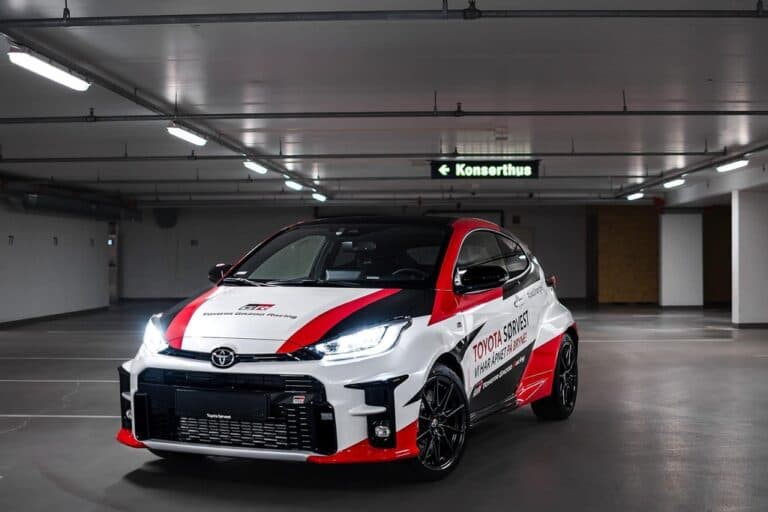
Advertising and logos on company vehicles are legal in Norway, and we have not found any separate approval scheme for vehicle graphics. The rules are about view, lights and number plates: the windscreen and front side windows must be free of applied film, the driver must have adequate view in all directions, and the graphics must not cover or be confusable with the number plate. Advertising on the car does not lower company car tax, and advertising costs are deductible for the business.
Show Off AS in Sandnes has produced vehicle graphics and vehicle advertising for businesses since 2017. Below are the rules we work by, with the section and a link to the primary source for each rule. The sources are Norwegian regulations, so the section names are our translations.
Which rules apply to advertising on company vehicles in Norway?
| Topic | What the rule says | Section and source |
|---|---|---|
| Windscreen and front side windows | Sprayed-on or applied film is not allowed on any part of the windows the driver must see through (windscreen and front side windows) | Vehicle regulations (kjøretøyforskriften) section 31-1 no. 3 |
| Rear window | Blue lights from emergency vehicles must be visible through the rear window in motor vehicles where an interior mirror is required | Vehicle regulations section 31-1 no. 3 |
| Driver's view | The driver must have adequate view in all directions, and no marking or object may block the view or distract | Vehicle use regulations (bruksforskriften) section 1-3 |
| Number plate | The vehicle must not carry a marking or sign that can be confused with a number plate or makes identification harder. The plate must be clearly visible | Vehicle use regulations section 2-9 (3) and (4) |
| Illuminated advertising | A car may have faintly lit or illuminated advertising signs, but the light must not disturb traffic or be confusable with traffic light signals | Car regulations (bilforskriften) section 8-2 (5) |
| Red and yellow reflective film | Allowed for documentable assignments on or along roads and for road sign authority work. Diagonal red and yellow stripes, at the rear and/or sides, never on the front or bonnet | Car regulations section 8-2 (3) and section 14-11 |
| Emergency vehicle markings | Base colour and reflective markings on uniformed emergency vehicles follow guidelines from the police, health, civil protection and defence authorities | Car regulations section 12-2 |
| Approval | New approval is required when a change means the car no longer matches its registration certificate, or affects the environment, road safety or fire safety | Car regulations section 7-5 (4) |
| Driver's responsibility | The driver must make sure the vehicle is in a safe and compliant condition before driving | Road Traffic Act (vegtrafikkloven) section 23 |
| Company car tax | The list price is not reduced even if the car carries advertising | Skatte-ABC B-7-11.1 |
| Deduction for advertising | Advertising costs in income-generating activity are deductible and can as a rule be expensed when incurred | Skatte-ABC R-9-2.1, Tax Act section 6-1 |
| VAT | Input VAT on acquisition, maintenance, use and operation of passenger vehicles, including class 1 vans, is as a rule not deductible. Class 2 vans used in VAT-registered business give a deduction | VAT handbook, VAT Act section 8-4 |
Can we put graphics on the windows?
What are the rules for film on car windows in Norway? In short: the windscreen and front side windows must be free of applied film, and the remaining windows must not block the driver's view. Section 31-1 no. 3 of the vehicle regulations states that sprayed-on or applied film is not allowed on any part of the windows the driver must see through, and names the windscreen and front side windows. The same point requires blue emergency lights to be visible through the rear window in motor vehicles where an interior mirror is required.
The vehicle regulations (kjøretøyforskriften) hold the technical requirements for cars first registered from 1 January 1995 to 14 September 2012. Sections 1-3 and 1-7 of the car regulations state that a car must keep meeting the technical requirements that applied at its first registration. Section 1-3 of the vehicle use regulations applies to every car regardless of age: the driver must have adequate view in all directions, and a marking must not block the view or distract.
In practice we keep the windscreen and front side windows completely clear on every vehicle. If the rear window or rear side windows are to carry graphics, we review rear visibility and the mirrors with you before production. The regulations we have read do not mention perforated window film specifically.
Lights, reflective film and emergency-style markings
Illuminated advertising is allowed as long as it is faintly lit and does not disturb other road users or look like traffic lights, under section 8-2 (5) of the car regulations. Red and yellow diagonal reflective film is regulated for vehicles used on documentable assignments on or along roads, and section 14-11 requires it to sit at the rear and/or sides, never on the front or bonnet.
Emergency vehicles may use retroreflective markings, and the base colour and markings of uniformed vehicles follow guidelines from authorities such as the Norwegian Police Directorate and the Directorate of Health (section 12-2). We recommend that ordinary vehicle advertising does not copy those patterns.
Do vehicle graphics need approval or registration?
We have not found any separate approval or notification scheme for vehicle graphics in the car regulations or the vehicle use regulations. Section 7-5 (4) of the car regulations requires new approval when a change means the car no longer matches its registration certificate, or when it affects the environment, road safety or fire safety. Under section 23 of the Road Traffic Act the driver is responsible for the vehicle being in compliant condition, and that includes the graphics.
The number plate must be clearly visible, and the vehicle must not carry markings that can be confused with a number plate or make identification harder (vehicle use regulations section 2-9).
Tax and VAT on vehicle graphics
Company car: The Tax Administration's Skatte-ABC handbook states that the list price is not reduced even if the car carries advertising. The employee is taxed on private use on the same basis with or without graphics.
Deduction: According to Skatte-ABC, advertising costs in income-generating activity are deductible under section 6-1 of the Tax Act and can as a rule be expensed when incurred. The Tax Administration does not address vehicle graphics specifically, so let your accountant decide how the invoice is booked.
VAT: Section 8-4 of the VAT Act as a rule denies input VAT deduction for acquisition, maintenance, use and operation of passenger vehicles, including class 1 vans. Class 2 vans used in VAT-registered business give a deduction. The VAT handbook does not state explicitly whether graphics on a passenger car count as operation, so check with your accountant before claiming VAT.
Lease cars and resale: removing the graphics
The lease agreement decides whether you can put graphics on the car and the condition it must be returned in. Read the terms on film, markings and return before you order. Professional film can be removed without damaging the original paint, provided the paint was in good condition when the graphics were applied. We remove old graphics when a vehicle is sold, returned or rebranded.
Checklist before you order vehicle graphics
- Windscreen and front side windows are kept free of film.
- Rear visibility and mirrors are checked if the rear window or rear side windows will carry graphics.
- The number plate is clearly visible, and no part of the design looks like a number plate.
- The design has no red and yellow reflective striping or patterns that resemble emergency vehicles.
- Any illuminated advertising is faint and cannot be mistaken for traffic lights.
- The lease agreement has been checked for terms on film and return condition.
- Your accountant knows whether the vehicle is a passenger car, a class 1 van or a class 2 van.
How Show Off helps with vehicle graphics
We design, produce and install vehicle graphics and advertising on company cars in our workshop at Luramyrveien 17 in Sandnes, about 10 minutes from Stavanger city centre. A graphics package with logo, contact details and simple decor costs from NOK 5,250 excl. VAT for a passenger car and from NOK 5,900 excl. VAT for an SUV or large car. Vans and fleets are priced by scope.
Before production we show how the graphics will look on your exact vehicle model, with the windscreen and front side windows kept clear. If you run several vehicles, read about commercial vehicle graphics and fleet branding. For signage and trade shows we have a separate overview of rules for signage and branding in Norway.
Response to enquiries within 24 hours. Contact us with your vehicle model and logo and we will send a concrete proposal.
This overview is general information and does not replace the assessment of the Norwegian Public Roads Administration, the Tax Administration, your accountant or your leasing company in each case.

Christer Rasmussen
Key Account Manager for vehicle graphics and specialty products
Christer writes about vehicle graphics, vehicle advertising, and product choices based on customer projects, workshop experience, and day-to-day advisory work.
Need help deciding?
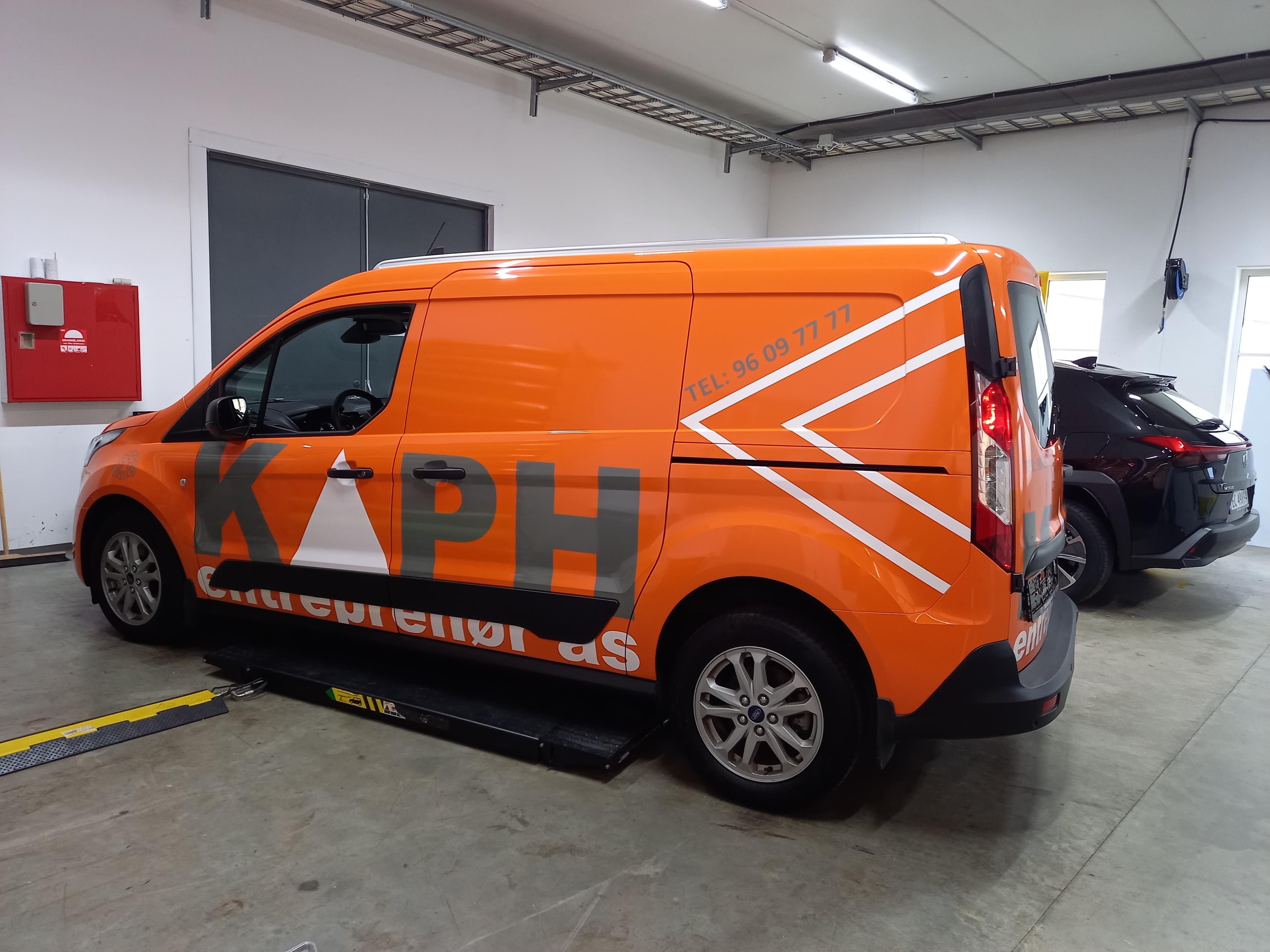
Relevant projects
See real client cases and deliveries closely related to the topic of this guide.

Stay updated
Subscribe to our newsletter for tips on branding, wrapping and more.