
Stone Chip Protection: Spray, Film or PPF?
Stone chips are the most common cause of paint damage in Norway. Spray, DIY film and professional PPF are three different solutions. Here we compare all three and explain what actually works.
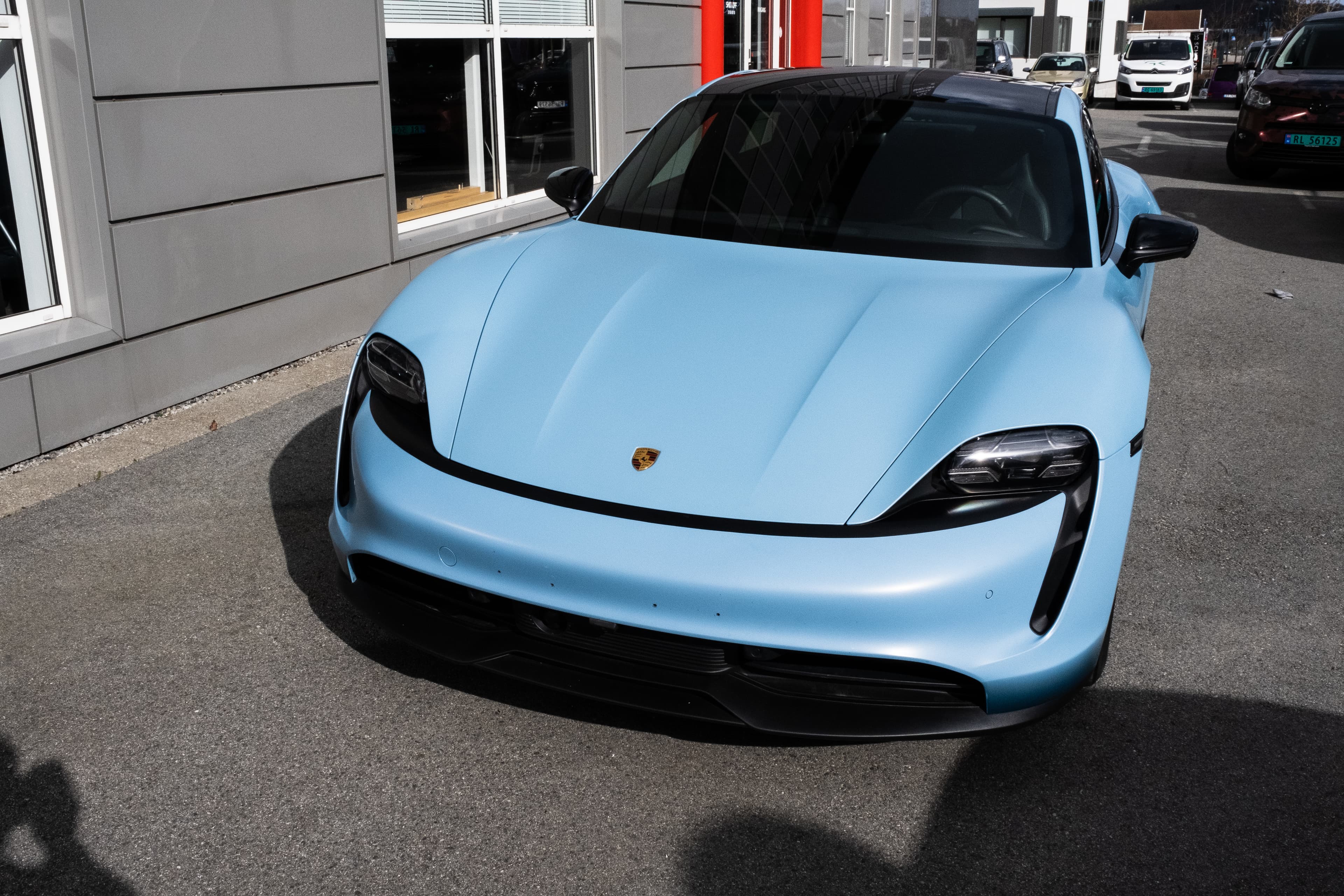
Stone chip protection for your car is something every Norwegian car owner should consider. Norway is one of the worst countries in Europe for stone chip damage. Studded tyres, gravel roads, grit spreading and salt mean Norwegian cars are exposed to far more stone chips than cars in most other countries. The result is that millions are spent every year on paint repairs that could have been avoided.
But which stone chip protection works best? There are three main options: spray, self-adhesive film and professional PPF. Here is an honest comparison.
Three Types of Stone Chip Protection
1. Stone Chip Spray (Underbody Coating)
Stone chip spray is a thick, rubber-like coating that is sprayed on. It is traditionally used on the underbody and wheel arches, but some products are also marketed for painted surfaces.
Advantages:
- Cheap (a few hundred kroner per can)
- Easy to apply yourself
- Good protection for underbody and wheel arches
Disadvantages:
- Not suitable for visible painted surfaces (matte, rough finish)
- Cannot be removed without damaging the paint
- No UV protection
- Yellows and flakes over time
Suitable for: Underbody and wheel arches. Not for bonnets, fenders or other visible surfaces.
2. DIY Film (Self-Adhesive Protection Film)
Self-adhesive films sold in hardware stores and online shops. You cut to size and apply yourself.
Advantages:
- Cheaper than professional PPF (NOK 500 - 2,000)
- Available as pre-cut kits for some car models
- Provides some physical protection
Disadvantages:
- Thinner film (50-100 microns vs. 200 microns for professional PPF)
- No self-healing properties
- Difficult to apply without bubbles, wrinkles and visible edges
- May yellow and lose clarity after 1-2 years
- Limited or no warranty
Suitable for: Temporary protection or cars where appearance is not a priority.
3. Professional PPF (Paint Protection Film)
PPF (Paint Protection Film) is a transparent polyurethane film installed by professionals in a controlled environment. The film is 200 microns thick and has a self-healing top coat.
Advantages:
- 200-micron thick film that absorbs stone chip impacts
- Self-healing: light scratches disappear on their own with heat
- Nearly invisible on the paint
- UV protection prevents fading
- Hydrophobic surface, easier to keep clean
- 7-10 year lifespan with warranty
- Can be removed without damaging the paint
Disadvantages:
- Higher price (from NOK 15,900 for Front Kit)
- Requires professional installation
Suitable for: All cars where you want to keep the paint in top condition.
Comparison
| Feature | Spray | DIY Film | Professional PPF |
|---|---|---|---|
| Stone chip protection | Good (underbody) | Moderate | Excellent |
| Visible surfaces | No | Partial | Yes |
| Self-healing | No | No | Yes |
| UV protection | No | Limited | Yes |
| Lifespan | 1-3 years | 1-2 years | 7-10 years |
| Removal | Difficult | May leave adhesive residue | Professional, damage-free |
| Price | NOK 200-500 | NOK 500-2,000 | from NOK 15,900 |
| Appearance | Visible, matte | May be noticeable | Nearly invisible |
Norwegian Conditions: Why Stone Chips Are a Major Problem
Stone chips are not just annoying; they are a real value problem for Norwegian car owners:
- Studded tyres are legal from 1 November to the first Monday after Easter. During this period, studded tyres kick up stones and grit with far greater force than summer tyres.
- Grit spreading and salting deposits stones and grit on the road surface that is thrown up by traffic.
- Gravel roads are found throughout the country outside the largest cities.
- Tunnels accumulate loose material that sprays up against cars.
In these conditions, neither spray nor cheap film is sufficient for visible painted surfaces. PPF is the only solution that provides durable, invisible protection.
What Does It Cost Not to Protect Your Car?
Many people think stone chips are purely cosmetic. But the damage has real consequences:
| Consequence | Cost |
|---|---|
| Stone chip repair (per chip) | NOK 1,500 - 3,000 |
| Bonnet respray | NOK 8,000 - 15,000 |
| Reduced resale value | NOK 10,000 - 50,000 |
| Deductions at lease return | NOK 5,000 - 25,000 |
By comparison, a PPF Front Kit (bonnet, bumper, fenders) costs from NOK 15,900 and protects for 7-10 years.
Our Recommendation
For underbody and wheel arches: stone chip spray from your workshop is sufficient.
For visible painted surfaces (bonnet, bumper, fenders, mirror caps): professional PPF is the only solution that combines physical protection, invisibility and long lifespan.
DIY film can work as a temporary solution, but do not expect professional results or long durability.
PPF Prices at Show Off AS
| Package | Sedan | SUV |
|---|---|---|
| Front Kit (bonnet, bumper, fenders) | NOK 15,900 | NOK 19,800 |
| Track Pack (+ rockers, wheel arches) | NOK 21,900 | NOK 25,900 |
| Full wrap (entire car) | NOK 40,000 | NOK 50,000 |
All prices ex. VAT. Calculate the price for your car with our PPF calculator.
Read more:
- How much does PPF cost? Complete pricing overview
- What is PPF? Everything you need to know
- PPF for Tesla
- PPF for lease vehicles
At Show Off AS in Sandnes, we install PPF using GSWF Defender Platinum in our temperature-controlled workshop. Contact us for a no-obligation assessment.
Why Choose Show Off for PPF?
PPF is only as good as the prep work, the installation environment, and the package you choose. At Show Off, we install PPF in controlled conditions, work with quality film, and help customers choose the right coverage instead of pushing a bigger package than they need.
That matters most on lease cars, heavily driven cars, and vehicles with exposed front ends. If the film is meant to protect for years, the work has to be right from the start.
Next Step
Not sure how much coverage you need? See our PPF service or contact us for a practical recommendation and quote.

Christer Rasmussen
Key Account Manager for wrapping, PPF, and specialty products
Christer writes about vehicle wrapping, PPF, paint protection, and product choices based on customer projects, workshop experience, and day-to-day advisory work.
Need help deciding?
PPF vs. Ceramic Coating: What Suits Your Car?
Comparison of paint protection film and ceramic coating. Pros, cons, durability, and prices side by side.
Stay updated
Subscribe to our newsletter for tips on branding, wrapping and more.